
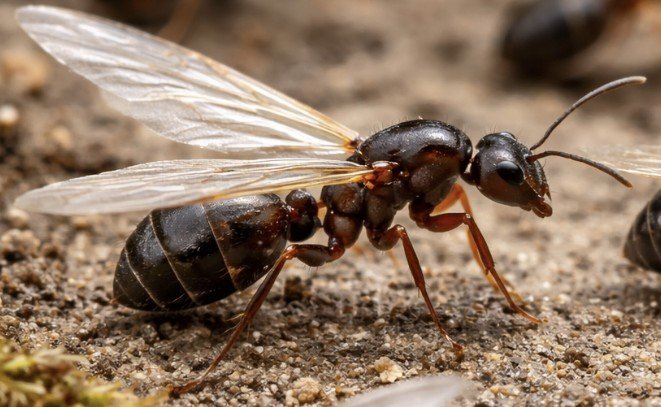
When flying ants, often called alates, unexpectedly swarm your house, it can be rather unsettling. The reproductive members of an ant colony, these winged intruders are searching for new territory. Even if their appearance could seem unnerving, you can take charge if you know how they behave and why they are drawn to your area.
This tutorial will help you deal with everything from a few buzzing ants to a full-blown infestation. We’ll examine the factors that draw flying ants to your house, look at their life cycle, and offer advice on how to get rid of flying ants effectively.
What Are Flying Ants (Alates)?
The aerial explorers of the ant kingdom are flying ants, sometimes referred to as alates. The sole purpose of these winged males and females is to mate and establish new colonies. During nuptial flights, an amazing natural phenomenon in which the males and females take to the skies in search of a mate, they emerge in coordinated swarms.
The impregnated females land to start their journey as new queens, dropping their wings and setting the groundwork for the next generation of ants, while the males meet their demise after the mating ritual is finished. If you’re wondering how to get rid of flying ants, it’s important to understand their life cycle and behavior first.
Female and Male Flying Ants: What’s the Difference?
- Female Flying Ants: The female flying ants are larger and more dominant. After mating, they shed their wings and begin searching for a suitable place to start a new colony. These ants can live for several years and are responsible for the colony’s growth.
- Male Flying Ants: Males are smaller and live only for a short time after mating. Their sole purpose is to mate with the queen and then die shortly afterward.
Why Are Flying Ants Attracted to My Home?

Flying ants are attracted to several environmental factors, which make homes an inviting place for them:
1. Attraction to Light: Flying ants are naturally drawn to light, especially during their nuptial flight. You’ll often find them swarming around windows, light bulbs, or any other light source in your home. This behavior is part of their reproductive strategy as they take flight and seek out mates.
2. Emergence During Nuptial Flights: Flying ants typically emerge in late spring or early summer when environmental conditions are warm and humid. The nuptial flight is the time when the ants leave their nests to mate and form new colonies.
3. Food and Moisture: Flying ants are also attracted to areas where there is a supply of food or moisture. Spilled food, crumbs, or water leaks can encourage them to invade your home in search of sustenance.
Flying Ants in Your Home: Understanding the Causes and Behavior
Flying ants typically enter your home during the mating season. They are often seen near windows, doors, and other light sources. Flying ants are not only attracted to the light but also to moisture and warmth, which can explain why they may enter your home.
- Nuptial Flights: These flights occur when ants leave their colonies to mate. The flying ants are generally seen in large swarms, and once mating occurs, the males die, and the females search for new nesting sites.
- Lifecycle: After mating, the fertilized female flying ants land, shed their wings, and begin establishing new colonies. These new queens will lay eggs, which hatch into worker ants. The worker ants are responsible for feeding and protecting the queen, and the colony continues to grow.
- Constriction and Antennae Shape: Flying ants are distinguishable from termites by their body shape. Flying ants have a constricted waist, which gives them an hourglass shape. Additionally, their antennae are elbowed, unlike termites, whose antennae are straight.
- Feeding Habits: Flying ants are mainly foragers, but the winged ants that appear during nuptial flights do not feed—they only mate and seek out new colony sites.
Spotting a Flying Ant Invasion: How to Identify and Tackle Infestations
Flying ants are often confused with termite Swarming but they can be distinguished by their body shape and antennae. Termites have a uniform body and straight antennae, while flying ants have a constricted waist and elbowed antennae.
What to Do If You Find a Flying Ant Nest?
Flying ants usually have their nests outdoors, but they can also establish nests inside your home. If you notice swarming inside, try to locate the nest and address the source of the infestation.
-
Worker Ant Traits: Worker ants are the non-reproductive ants that maintain the nest. If you spot flying ants, it’s likely that worker ants are also nearby, helping to maintain the colony.
Prevention and Control: How to Get Rid of Flying Ants
Now that we understand why flying ants are attracted to homes and their behavior, it’s time to look at the best ways to get rid of flying ants and prevent future infestations.
1. Seal Cracks and Gaps
Flying ants enter your home through cracks and gaps in doors, windows, and walls. To prevent them from coming inside, seal all entry points. Use caulk or weatherstripping around window frames, doors, and foundations. Regularly inspect your home for cracks and seal them promptly.
2. Store Food Securely
Flying ants are attracted to food. Keep food items in airtight containers, and make sure to clean up spills and crumbs immediately. Regularly vacuum to keep your home free from food particles.
3. Clean Up Spills and Crumbs

Flying ants are drawn to sugary substances and food crumbs. By keeping your home clean, you’ll reduce the likelihood of attracting them. Wipe down surfaces, clean up spills quickly, and ensure there’s no leftover food in open areas.
4. Install Window Screens
To prevent flying ants from entering your home, install window screens. Screens will block the ants from flying inside when you open windows for ventilation.
5. Use a Vacuum to Remove Flying Ants
If you see flying ants indoors, use a vacuum to quickly eliminate them. This method is effective for capturing ants before they have a chance to establish a colony in your home.
6. Locate the Ant Nest
If the infestation is significant, it’s essential to locate the source of the problem. Check the yard, foundation, and areas near windows or doors for ant nests. Locating the nest is key to addressing the issue at its root.
7. Use Ant Bait Stations
Ant bait stations are effective in eliminating flying ants by attracting them with poison, which they carry back to their colony. This method helps to reduce the number of ants in your home without the need for harsh chemicals.
8. Non-Pesticide Methods
If you prefer a natural approach, you can use scent-based deterrents like essential oils (peppermint, tea tree, or citrus). Burning ant-repellent incense made with ingredients like citronella or eucalyptus can also help repel flying ants.
9. Fix Damp Spots
Flying ants are attracted to moisture. Inspect your home for damp spots, leaks, or areas with excess humidity, particularly in basements and kitchens. Fix any leaks and ensure that areas of your home are properly ventilated.
10. Professional Pest Control
If the infestation persists or becomes overwhelming, it’s best to call in professional pest control. Experts can locate hidden nests, apply targeted treatments, and ensure that the infestation is fully eradicated.
Frequently Asked Questions About Flying Ants
1. Why are flying ants attracted to my home?
Flying ants are attracted to light, food, moisture, and warmth. During mating season, they swarm toward light sources and seek shelter in warm environments.
2. How can I tell the difference between flying ants and termites?
Flying ants have a constricted waist and elbowed antennae, while termites have a straight body and antennae.
3. How long do flying ants live?
Flying ants live for only a short time after mating. The males die shortly after mating, while the females (queens) search for a place to establish a new colony.
4. What should I do if I find a flying ant nest in my yard?
If you locate a nest in your yard, use ant bait or natural deterrents to treat the area. If the infestation is large, consider calling a professional pest control service.
5. How can I prevent flying ants from coming inside?
Seal cracks and gaps, install window screens, store food securely, and clean up spills promptly to prevent flying ants from entering your home.
Banish Flying Ants for Good!
Don’t let flying ants take over your home! By understanding their behavior, knowing what attracts them, and taking the right steps to prevent and eliminate them, you can keep your space free of these buzzing invaders. Whether you choose natural remedies, non-toxic methods, or call in the experts, tackling the problem early is key to maintaining a comfortable, pest-free environment. So, take action now, and you’ll be saying goodbye to flying ants once and for all!