

Squash bugs are the kind of garden problem that sneaks up on you. One week your squash plants look strong and productive. The next, leaves wilt, vines collapse, and fruit stops growing. I have watched entire beds go downhill fast, not because I ignored my garden, but because squash bugs are experts at hiding in plain sight.
If you grow squash, zucchini, pumpkins, cucumbers, or melons, squash bugs are not just a possibility. They are a threat. The good news is that once you understand their behavior, biology, and weak points, control becomes far more predictable.
This guide brings everything together: what squash bugs are, how to identify them, the damage they cause, how to manage them in home gardens and small farms, how indoor pests like gnats fit into the bigger picture, and how to keep infestations from coming back season after season.
What Are Squash Bugs?
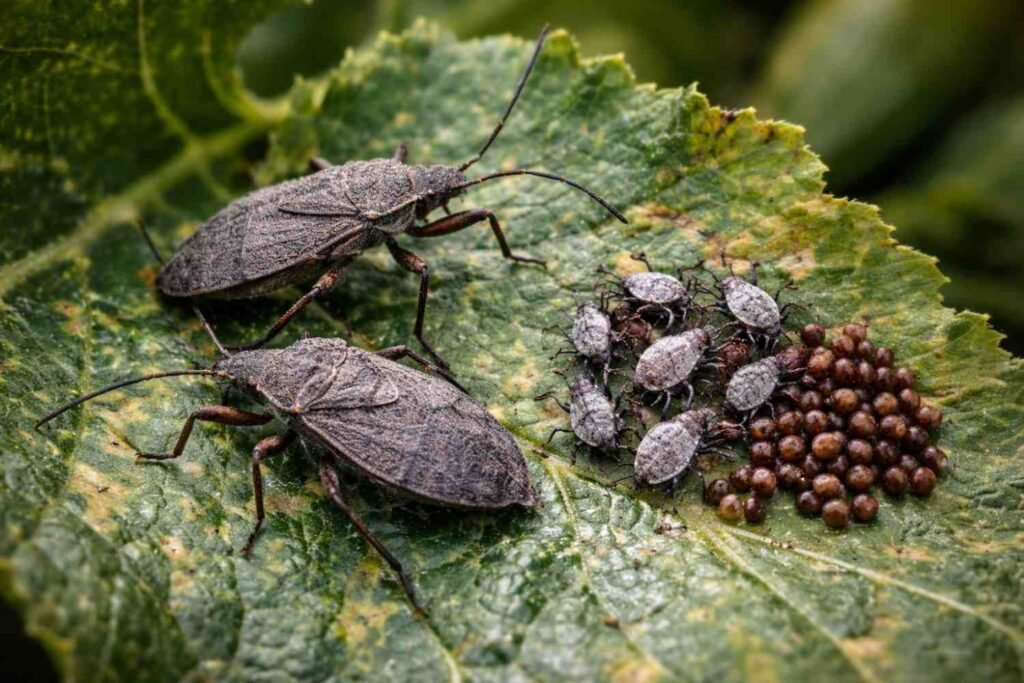
Squash bugs are Sap-Sucking insects from the true bug family that target plants in the cucurbit group. Adults are flat, oval-shaped, and typically dark brown or gray with rust-colored markings along their edges.
They prefer warm weather and spend most of their time hiding. You will often find them clustered at the base of plants, tucked under leaves, or concealed beneath mulch and garden debris. Because they stay out of sight, infestations often go unnoticed until damage becomes severe.
How to Identify Squash Bugs at Every Life Stage
Correct identification is critical. Many gardeners mistake squash bugs for stink bugs or harmless beetles, which delays treatment.
Adult squash bugs are about half an inch long and release a strong odor when crushed. Nymphs are smaller, lighter gray or green, and usually gather in groups near feeding sites. Eggs are the easiest early warning sign. They appear in tight bronze or copper-colored clusters on the undersides of leaves, often along leaf veins.
Spotting eggs early gives you the biggest advantage. Once they hatch, populations increase rapidly.
The Biology of Squash Bugs and Why They Persist
Squash bugs are difficult to control because their life cycle matches the growing season perfectly.
Adults overwinter in protected areas such as garden debris, mulch, woodpiles, and cracks near raised beds. In spring, they emerge and begin feeding immediately. Females lay eggs continuously throughout the season, often producing hundreds of offspring.
They feed by piercing plant tissue and sucking out sap while injecting toxins that disrupt water flow. This explains why plants wilt even when soil moisture looks adequate. Understanding this biology is essential if you want to master how to get rid of squash bugs instead of reacting after damage appears.
What Harm Do Squash Bugs Cause to Plants?
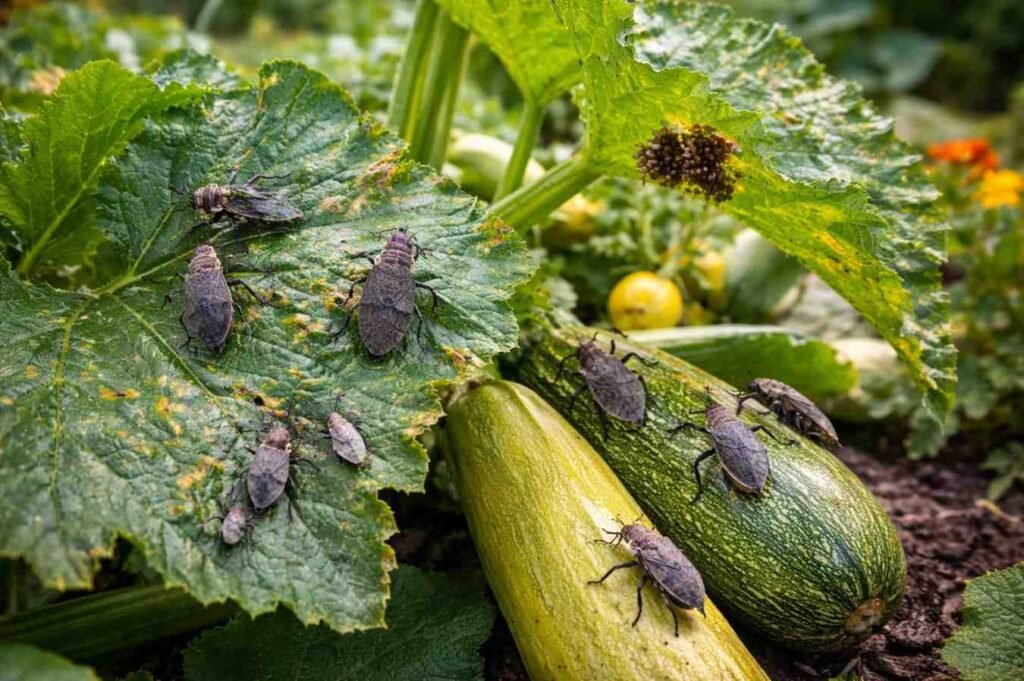
Squash bugs damage plants both visibly and internally.
Early signs include yellow speckling on leaves, followed by browning and wilting. As feeding continues, vines weaken, flowers drop, and fruit production slows. In heavy infestations, entire plants collapse and die.
Squash bugs can also spread plant diseases, accelerating decline and reducing yields even further. Left unmanaged, they can destroy a crop in a matter of weeks.
Why Squash Bugs Thrive in Home Gardens and Farms
Squash bugs succeed because gardens unintentionally give them everything they need.
Dense foliage provides shade and protection. Thick mulch offers hiding places. Continuous planting of cucurbits creates a steady food supply. Without active monitoring, squash bugs multiply quietly and overwhelm plants before gardeners realize what is happening.
This is why passive gardening almost always leads to infestations.
Managing Squash Bugs in Home Gardens and Small Farms
Effective management requires consistency, not panic.
I check my plants daily during peak season, especially leaf undersides and plant bases. Hand-removing egg clusters and dropping adults into soapy water reduces populations dramatically when done early.
Using boards or pieces of cardboard as traps works well. Squash bugs hide underneath them overnight. In the morning, I flip the boards and remove the bugs before they scatter. This simple routine is one of the most reliable tools for how to get rid of squash bugs without chemicals.
Do Squash Bugs Live Inside the House?
Squash bugs do not typically live inside homes, but they can occasionally be found indoors. These insects are outdoor pests that depend on garden plants like squash, pumpkins, and cucumbers for food. When squash bugs appear in houses, it is usually accidental rather than a sign of an indoor infestation.
They often enter homes in late summer or fall while searching for warm, protected places to overwinter. Squash bugs may slip inside through open doors, windows, cracks, or gaps around foundations. Once indoors, they do not reproduce or cause structural damage, but they can be unpleasant to see and may emit a strong odor if crushed.
If squash bugs are found inside, sealing entry points and removing outdoor debris near the home usually prevents future sightings.
how to control squash inside the house
Here’s a clean, practical section you can add directly to your blog. It’s written in American English, clear, and actionable.
How to Control Squash Bugs Inside the House
Squash bugs inside the house are usually accidental invaders, not a true infestation. The goal is removal and prevention, not aggressive treatment.
Start by physically removing them. Vacuuming is the safest and cleanest option, especially since squash bugs release an unpleasant odor when crushed. Dispose of the vacuum contents immediately.
Seal entry points next. Check windows, doors, baseboards, vents, and foundation gaps. Caulk cracks and install door sweeps to block future entry, especially in late summer and fall.
Reduce outdoor attraction. Remove garden debris, mulch piles, and old squash vines near the house, since squash bugs hide there before moving indoors.
Avoid indoor pesticides. They are unnecessary and ineffective for squash bugs inside homes. Prevention and exclusion work far better than chemicals.
Once access points are sealed, indoor squash bug sightings usually stop completely.
Natural Treatments That Actually Work
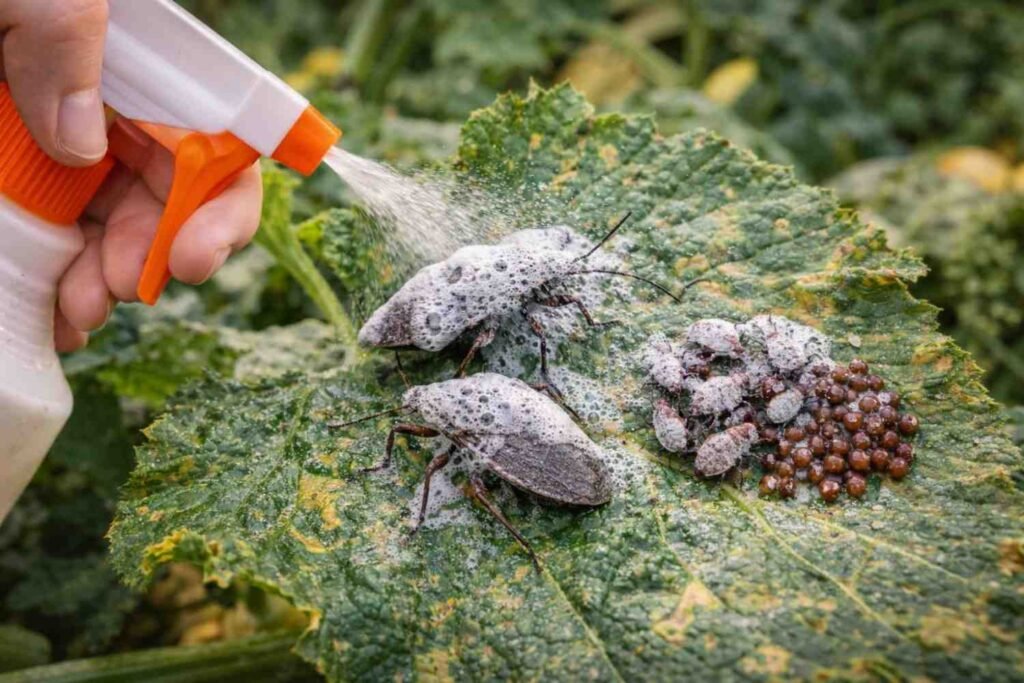
Simple Soap Spray
A basic soap spray is one of the most effective low-impact treatments available. Mild liquid soap mixed with water breaks down squash bugs’ protective outer layer, causing dehydration. This works best against young nymphs and should be applied directly in the early morning or evening.
Neem Oil
Neem oil does not kill instantly. It disrupts feeding, growth, and reproduction. Applied to leaf undersides, it weakens populations over time and reduces egg-laying when used consistently.
Diatomaceous Earth
Diatomaceous earth damages squash bugs’ exoskeletons on contact. Applied lightly around plant bases in dry conditions, it adds constant pressure to the population and works well alongside other methods.
Coffee Grounds Spray
Diluted brewed coffee can act as a mild deterrent. I use it as a supplemental spray to discourage feeding, not as a standalone solution.
Used together, these methods create a system that steadily reduces pressure rather than chasing quick fixes.
Why Timing Determines Success or Failure
Timing often decides whether you save your crop or lose it.
Young nymphs are far easier to control than adults. Once squash bugs mature, they become more resistant to sprays and harder to remove. Early detection, egg removal, and treatment during the nymph stage give you the upper hand. This timing-focused strategy is the real secret behind how to get rid of squash bugs without sacrificing plants.
Keeping Other Pests Like Gnats From Complicating the Problem
Healthy gardens also depend on managing secondary pests such as gnats. Gnats thrive in moist soil, clogged drains, and decaying organic matter. Overwatering and poor drainage can invite gnats indoors and outdoors, creating additional stress on plants and gardeners alike.
Good moisture control, clean garden practices, and proper soil management reduce both gnat activity and squash bug pressure at the same time.
How to Prevent Squash Bugs From Coming Back
Prevention is where long-term success lives.
At the end of the season, remove all vines and plant debris. Squash bugs overwinter in dead material, so cleanup matters. Crop rotation breaks their feeding cycle and reduces pressure the following year.
Mulch carefully. Thick mulch can provide hiding places, so keep plant bases clear. Encourage beneficial insects such as ground beetles and parasitic wasps, which naturally prey on squash bugs.
Strong prevention habits reduce the need to relearn control strategies every season.
Common Mistakes That Make Infestations Worse
Many gardeners unknowingly help squash bugs.
Ignoring early egg clusters allows populations to explode. Overusing sprays without targeting nymphs wastes effort. Leaving garden debris in place gives squash bugs safe overwintering sites.
Avoiding these mistakes saves time, plants, and frustration.
Frequently Asked Questions
1. Do squash bugs kill plants?
Yes. Heavy infestations can cause complete plant collapse.
2. Are squash bugs harmful to humans?
No, but they emit a strong odor when crushed.
3. Can plants recover after squash bug damage?
Mildly damaged plants can recover if bugs are removed early.
4. Are natural remedies enough for severe infestations?
They work best when combined with manual removal and prevention.
5. How long do squash bugs live?
Adults can survive for months and overwinter in protected areas.
Turning Squash Bugs Into a Solved Problem
Squash bugs thrive on neglect and inconsistency. Once you understand their biology, feeding habits, and hiding behavior, control becomes logical instead of overwhelming.
By combining early detection, soap sprays, neem oil, physical removal, moisture management, and smart prevention, you turn squash bugs from a recurring disaster into a manageable garden challenge. With the right system in place, they stop feeling inevitable and start feeling beatable.