

The first time I visited the US, the tipping screens caught me off guard. A simple coffee order, flip the tablet around, and suddenly I was choosing between 18%, 20%, or 25%. Back home, tipping felt optional. In the US, it felt built into every interaction. That moment sums up what most tourists experience here: tipping isn’t just polite, it’s part of how services function.
If you’re visiting the United States, budgeting for tips matters as much as booking flights or hotels. Many service workers rely on tips for a large portion of their income, especially in restaurants and hospitality. Understanding what locals expect helps you avoid awkward moments and, more importantly, treat people fairly.
Why Tipping Matters So Much in the US?
Tipping in the US works differently from many countries because service wages often sit well below standard minimum wage. Tips bridge that gap. Locals see tipping as a social contract: good service gets rewarded, and skipping a tip without a clear reason feels disrespectful.
For tourists, the confusion usually comes from two things:
- Tips appear everywhere, even in places where tipping feels optional.
- Percentages seem higher than what many visitors are used to.
Once you understand where tipping is expected and where it’s flexible, the system becomes easier to navigate.
General Tipping Guidelines Tourists Should Know
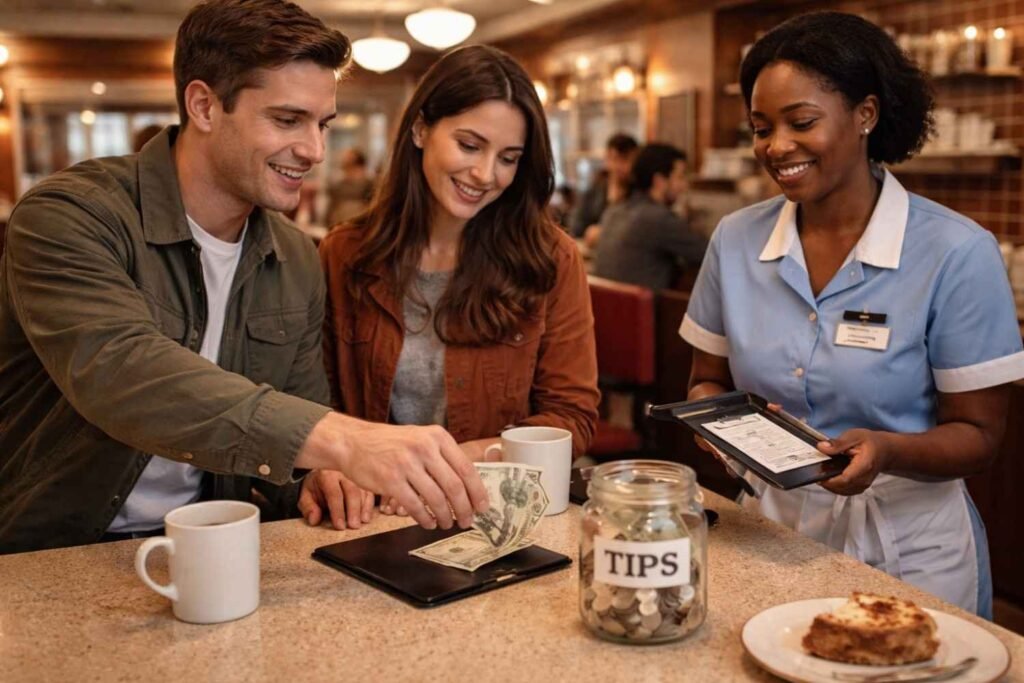
Below are the tipping norms most locals follow. These aren’t rigid laws, but they reflect everyday expectations across the US.
Restaurants (Full Service)
- 15%–20% of the pre-tax bill
- 20% is now the standard for good service
- Exceptional service often gets more
- For very poor service, leaving around 10% is common, but locals usually speak to a manager instead of tipping nothing
Bars & Bartenders
- $1–$2 per drink, or 15%–20% of the total tab
- Simple drinks like beer or wine usually sit at $1
- Complex cocktails often get $2–$3
- If you pay per drink, tip as you go
Hotels
- Bellhops/Porters: $2–$5 per bag, depending on weight and effort
- Housekeeping: $3–$5 per day
Leave it daily in a visible spot so the right staff receive it
Taxis & Rideshares
- 15%–20% of the fare
- A $2–$3 minimum works for short rides
- Tip extra if the driver helps with luggage
Tour Guides
- $5–$20 per person per day, or 15%–20% of the tour cost
- Longer or private tours usually sit on the higher end
Hair and Beauty Services
- 15%–20%
- Applies to haircuts, massages, nail services, and similar treatments
Food Delivery and Takeout
- Delivery: 15%–20%, with a $3–$5 minimum
- Takeout: 5%–10% or a few dollars is appreciated, not mandatory
Situations That Confuse Most Tourists

Tipping Is Expected, Not Optional
Legally, tipping is voluntary. Socially, it’s expected. Locals rarely skip tips unless service is truly unacceptable. When tourists don’t tip, staff often assume it’s unfamiliarity, not intention.
Always Check Your Bill
Many restaurants add an automatic gratuity or service charge, especially for groups of six or more. If you see it on the bill, extra tipping isn’t required unless the service stood out.
Payment Screens Can Feel Pushy
Digital payment terminals often suggest 18%, 20%, or 25%. You’re allowed to choose a custom amount. Locals do it all the time, even if it feels awkward at first.
Cash vs Card Tips
- Cash works best for hotel housekeeping and bell staff
- Cards are fine for restaurants, bars, rideshares, and tours
Carrying small bills ($1 and $5) makes tipping smoother in hotels and bars.
When You Usually Don’t Need to Tip?
Not every service interaction in the US comes with an unspoken tipping obligation, even though it can sometimes feel that way. Locals generally don’t tip in situations where there’s no personalized service or where the interaction is purely transactional.
You’re usually safe not tipping at:
- Fast-food restaurants where you order at a counter and collect your food yourself
- Self-service food courts and kiosks
- Coffee shops where the barista prepares your drink, but there’s no table service
That said, tip jars and digital prompts still appear in many of these places. These are often meant as optional gestures rather than expectations. Many Americans simply tap “no tip” or leave a dollar if they’re feeling generous, without overthinking it.
A helpful way to decide is to ask yourself: Did someone spend time taking care of me personally, or was this a quick, standardized transaction? If it’s the latter, tipping is appreciated but not required. Understanding this distinction helps tourists avoid unnecessary pressure and keeps tipping reserved for situations where it truly matters.
Common Tipping Mistakes Tourists Make

- Tipping on the after-tax amount instead of the pre-tax amount
- Forgetting to tip housekeeping daily
- Assuming service charges replace tips without checking
- Feeling pressured by screens and over-tipping out of discomfort
A simple rule helps: if someone provided personal service, a tip is probably expected.
Frequently Asked Questions (FAQs)
1. How much should tourists tip in US restaurants?
Most locals tip 20% of the pre-tax bill for good service. Fifteen percent works for average service, while excellent service often gets more.
2. Do tourists need to tip in hotels every day?
Yes. Housekeeping tips should be left daily so the correct staff member receives them.
3. Is tipping required for rideshares like Uber or Lyft?
Tipping isn’t mandatory, but 15%–20% is standard and widely expected, especially for smooth or helpful rides.
4. Can tourists choose “no tip” on payment screens?
Yes. Locals do it when tipping isn’t appropriate. It might feel uncomfortable, but it’s socially acceptable in counter-service settings.
Final Thoughts
Tipping culture in the USA can feel overwhelming at first, especially if you’re coming from a country where tipping is rare or symbolic. Once you understand that tips form a core part of service workers’ income, the system starts to make sense. You’re not just following a rule; you’re participating in how the service economy functions. With a little awareness and planning, tipping becomes less stressful and more instinctive.
Think of tipping as part of your travel budget. When you do, the experience feels smoother for you and fairer for the people helping you along the way.